Short version: I’ve been flying drones professionally since 2018. I’ve crashed three. I’ve never bought DJI Care Refresh on any of them. Looking back across the math, that decision was right twice and arguably wrong once. Here’s the framework I use to decide now, and why I think most working pilots over-think this.
If you’re looking for the “yes always buy it” / “no never buy it” answer that some YouTube channels will give you with a confident face, this isn’t it. The honest answer depends on what kind of pilot you are, what kind of work you do, and how you’ve already been thinking about your drone as a piece of business equipment.
What DJI Care Refresh actually is
For anyone who hasn’t bought a DJI drone in the last few years: DJI Care Refresh is DJI’s first-party damage protection plan. You buy it within a short window after purchasing a drone (usually 48 hours, sometimes longer) and pay a flat fee. In exchange, you get the right to send them a damaged drone and receive a replacement at a heavily discounted price — typically a fraction of what a new unit would cost.
Different drones have different Care Refresh tiers. Different replacement caps. Different time windows (usually one or two years of coverage with one or two claims allowed). The exact numbers vary by model and by the year you buy, and DJI updates the program periodically. Check the current details for your specific drone before deciding — those terms move.
The structural idea is consistent across all of them: you pay a known small fee up front so that an unknown larger fee at crash time becomes a known smaller fee.
That’s it. It’s not insurance in the traditional sense. There’s no liability coverage. No third-party damage. No theft. It’s specifically a damage replacement program for your drone in your hands.
Why I never bought it (the case against)
Three reasons, in order of importance.
The first one is structural. I think of every drone I own through the lens of The 20-Flight Amortization Rule. I assume the drone has to pay for itself across a defined number of flights, after which anything else is profit. I assume the drone will eventually be lost — to a crash, water, theft, an electronics failure I can’t recover from. I priced that loss into my work from day one.
In that framing, the question isn’t “do I want insurance against losing this drone?” It’s “should I move the loss from being all-at-once to being amortized as a small monthly cost?” And for someone already pricing every job to absorb gear loss across the run, the answer is no. The amortization is built in. Adding Care Refresh is double-counting.
The second one is behavioral. I noticed early in my career — and this is an uncomfortable thing to admit — that pilots who buy insurance for an asset start to fly that asset less carefully. Not consciously. Not dramatically. But the small risk-reward calculations they do every flight start to lean different. They take the marginal-risk shot they wouldn’t have taken before. They land closer to the obstacle than they should. They fly the marginal weather. The “I have backup” thought is in the back of their head, even if it never makes it to the front.
This is well-studied in other domains. Drivers with comprehensive insurance get into more accidents. Climbers with rescue insurance attempt harder routes. The phenomenon is called moral hazard, and it’s real. For a pilot whose biggest risk is their own decision-making (which, based on my own crashes, is everyone’s biggest risk), buying a thing that quietly tells your brain “you can take more risk” is the wrong direction.
The third one is the math, in the simplest case. If you assume an honest baseline — a careful pilot, flying conservatively, who crashes maybe once every two to three years — the cost of Care Refresh paid annually for that whole window plus the deductible at claim time is often roughly equal to the cost of the new drone you’d buy without it. The savings comes only when you crash early in the coverage window. Which is exactly the case where, if you’re being honest with yourself, you probably shouldn’t have been flying that aggressively in the first place.
When DJI Care Refresh genuinely makes sense
That said, there are real cases where I’d recommend it without hesitation.
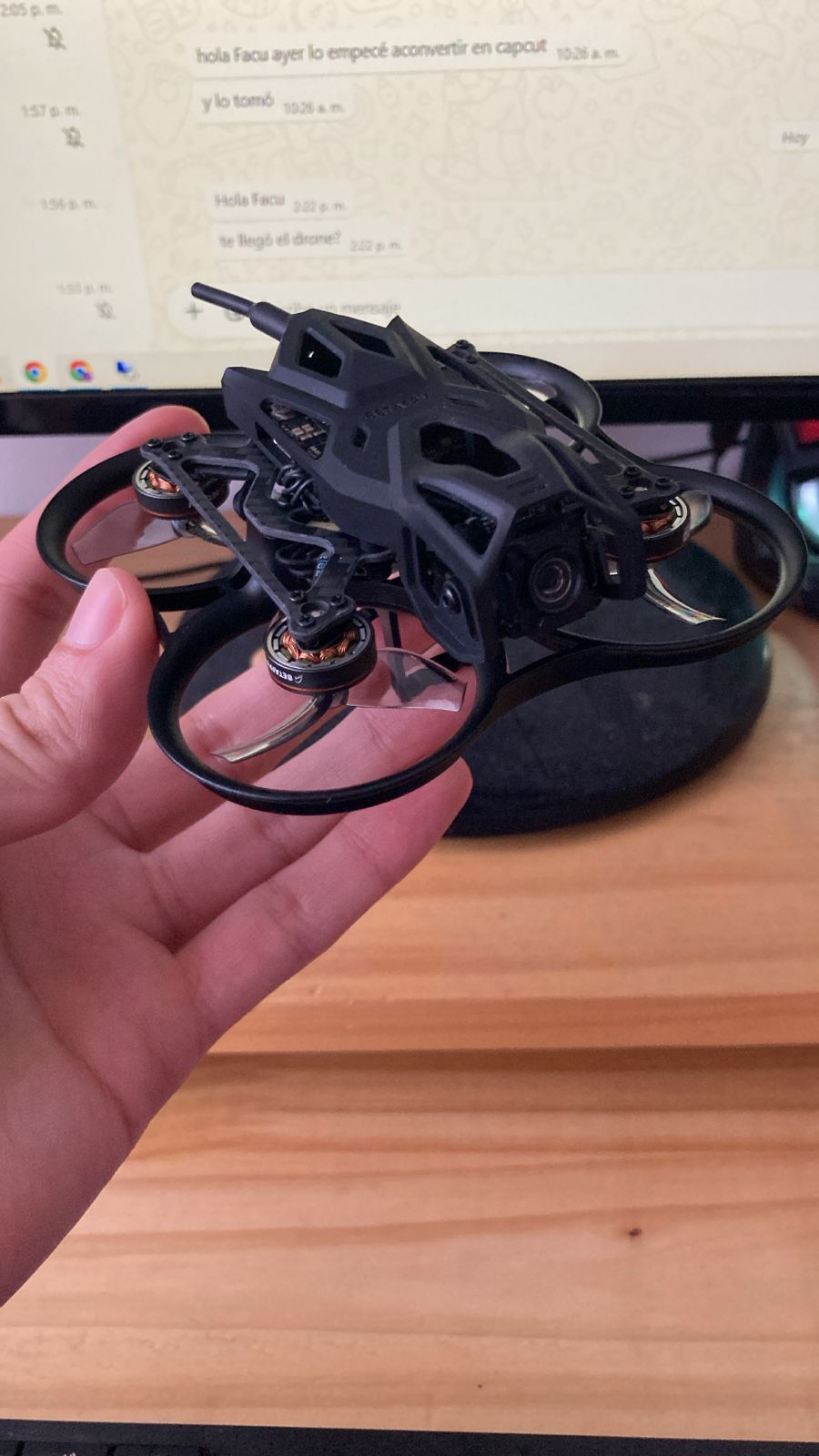
You fly FPV. FPV crashes are not rare events. They’re a normal part of learning the craft and a regular part of the working pilot’s experience even after years of flying. The crash rate for an FPV pilot is structurally higher than for a cinematic GPS-stabilized drone pilot, and the gear is often more expensive to replace because of the specialized cameras. Care Refresh on an Avata or a Pavo or anything you fly in cinewhoop or freestyle modes is closer to a cost of doing business than a hedge.
You’re new to a specific drone. The first 20 flights with a new airframe are when you’re most likely to crash it. You don’t have the muscle memory yet. You don’t know its specific quirks. You haven’t internalized the failure modes. If you’re transitioning from a different model — DJI Air to a Mavic Pro, for instance, or any model with a different orientation logic — buying Care Refresh for that first year of flying the new gear is a reasonable hedge. After year one, drop it and self-insure with the savings.
You have a job that mandates it. Some commercial contracts — government, real estate developments, certain insurance-required jobs — will require you to demonstrate replacement capacity for the gear you’re using. Care Refresh can be the cheapest way to satisfy that contract requirement, even if it’s not the cheapest way to actually cover yourself.
You can’t comfortably absorb a total loss. If your drone costs $1,500 and a total loss tomorrow would push you into uncomfortable financial territory, buy Care Refresh. The framework I’m describing — amortize across flights, price gear loss into the work — assumes you have enough financial slack that a sudden gear loss is an inconvenience, not a crisis. If your situation is different, the calculation changes. Don’t be a hero for the sake of an opinion.
The actual decision framework
Here’s how I’d run the decision now if I were buying a new drone.
Question 1: How many paying flights will this drone do in its first year?
If the answer is fewer than 10, Care Refresh is probably not worth it — you don’t have enough flight volume for the statistical risk of a crash to justify the premium. If the answer is more than 30, also probably not worth it, because you should have priced gear loss into your work and be financially absorbing it.
The middle case — 10 to 30 paying flights in year one — is where the calculation gets close. Lean toward yes if you’re new to the model, lean toward no if you’re already amortizing through your pricing.
Question 2: How aggressive is your typical flight envelope?
If you’re flying conservative cinematic work in calm conditions with controlled environments, the crash probability per flight is genuinely low. If you’re flying FPV, indoor cinewhoop, real estate jobs in tight urban environments, or any work near water or crowds, the crash probability is structurally higher. Care Refresh shifts from a hedge to a near-necessity as the envelope gets more aggressive.
Question 3: Have you priced gear loss into your jobs?
Some pilots have. Most haven’t. If your hourly rate or per-job rate doesn’t account for the eventual loss of the drone, you have a hidden cost that’s going to surprise you. Care Refresh is one way to make that cost explicit and predictable. The other way is to do the amortization math directly and add the gear-loss line to your pricing. I prefer the second; it’s cheaper across a long career and it forces honest pricing conversations. But the first is simpler, and simpler counts.
My honest verdict on my own three crashes
Looking backward at my own decision history with each of my three crashed drones:
-
Phantom 3, 2019. I owned it for almost three years before the wall-effect crash, and the damage was non-fatal — a chipped motor housing and a destroyed prop. Care Refresh would’ve been a clear loss of money for me on that drone. I made the right call.
-
Mavic 1, around 2021. I owned it for several years and crashed it once into the tree at República de los Niños. The Mavic survived with zero structural damage; just dye-stained from leaves. Care Refresh would’ve been a clear loss again. Right call.
-
Government drone, 2023. Total loss in Ensenada. This wasn’t my drone — it belonged to the State, and the State’s procurement department handled the replacement, which was a different conversation entirely. So Care Refresh wasn’t even on my decision tree. But for argument’s sake: if the drone had been mine and I’d been operating at the skill level I was at by 2023, the crash probability per flight was low enough that I’d still skip Care Refresh. A drone owner running my flight volume and priced jobs would have been ahead by self-insuring.
Three for three on the right call, by my reading.
Where I’d buy it next time
The next drone I’m planning to add — likely a higher-end cinematic model for specific creative work I want to do more of — I’ll probably buy Care Refresh on for the first year. New model, unfamiliar handling, higher price point, and I want the safety net while I’m in the high-risk early-flights window. After year one, I’ll drop it and self-insure.
That’s the most honest answer I can give: the structurally right answer for most working pilots most of the time is no, but the right answer for some pilots in some configurations is yes, and the discipline is knowing which one you are.
If you’re tempted to buy Care Refresh because everyone in the YouTube comments says you should — that’s not a reason. If you’re tempted to skip it because someone with a confident voice told you it’s a waste — also not a reason. Run the questions above against your specific situation. Make the call that fits your math, not someone else’s.
Then, regardless of what you decide, fly like you didn’t buy it. The pilot who flies as if a crash is real flies safer than the pilot who flies as if a crash is covered. And in the long run, that pilot keeps their drones longer, regardless of which line in the contract they signed.