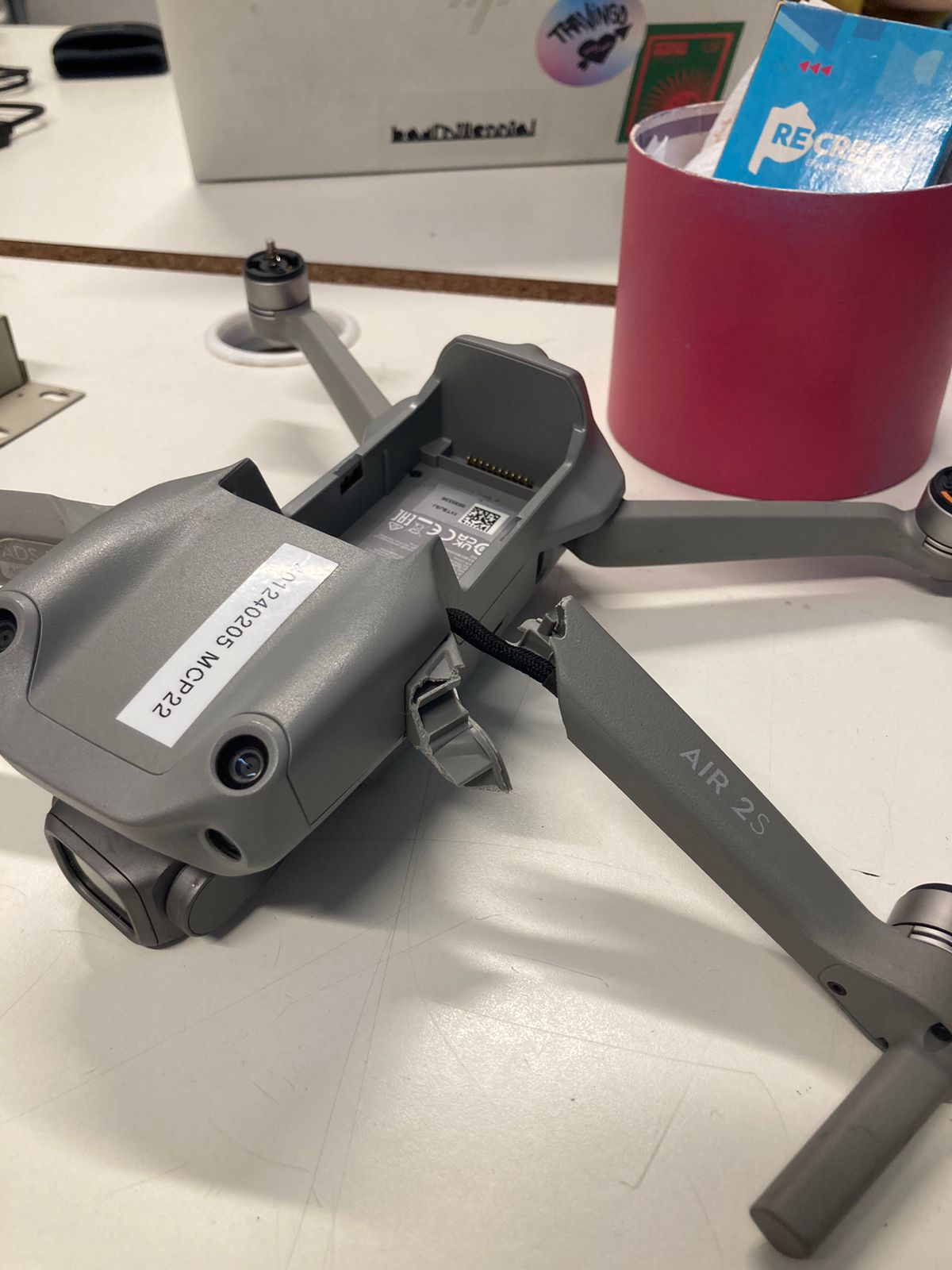
In six years of flying drones for clients — government, weddings, real estate, and the personal jobs I take to stay sharp — I’ve crashed three. None of them failed mechanically. The drones did exactly what they were told. The pilot is the part that went wrong, three different ways.
This is the long version of all three. Year by year, drone by drone, with the lesson at the end. Read it not because the crashes are interesting — they’re not, really — but because the pattern across them is. After the third one, I started writing differently about how this work actually goes.
Crash №1 — Phantom 3, end of 2019: filming the year-end muñecos
A note for anyone outside Argentina: at the end of every December, in the cities around Buenos Aires where I live, neighborhoods build huge wood-and-cardboard figures called muñecos. They’re sometimes three meters tall, sometimes seven. They take weeks to build. At midnight on December 31st, they get burned in the streets as a New Year’s tradition. It’s a remarkable thing to film from the air — bright, structured, doomed.
I was 18 months into owning my first drone, a Phantom 3. I’d treated it like gold from day one. Read every manual, ran the simulator hours, kept the flight log obsessively. I was conservative to the point that other pilots my age made fun of me — they were doing freestyle moves in week three while I was still studying compass calibration.
I still have a soft spot for the Phantom 3. Its problem was geometric. The body is a perfect square. Four arms, four motors, no clear “front.” From the ground, looking up, it’s almost impossible to tell which way the drone is facing. Modern drones (Mavic, Mini, Avata) are deliberately elongated for exactly this reason — your visual orientation matches the drone’s flight orientation. Phantom pilots had to learn to read the LED lights. Most of us learned by getting it wrong once.
I was setting up to land near a wall. Smooth descent, controlled, no wind to speak of. About four meters off the ground, the drone started drifting laterally toward the wall. Slowly. I corrected — moved the stick away from the wall — and the drone moved toward it.
What I didn’t know in that moment: the rotors of a descending drone push air down. Near a vertical surface, that downwash creates a low-pressure pocket between the drone and the wall. The drone gets sucked toward the surface. It’s a real physical effect, not a sensor failure. The same kind of pressure differential you feel when a transport truck passes you on a highway and your car wobbles toward it.
I’ve since learned to call this the wall effect, and I’ll write a separate piece on it. In the moment, I had no name for it. I had a confused drone moving the wrong direction. I tried to compensate. With a square Phantom and a panicked pilot reading the orientation wrong, my correction was actually toward the wall, not away. The drone hit the side of a brick wall, dropped about a meter, and hit the pavement.
The pilot mistake wasn’t the wall effect. It was that I tried to fix something I didn’t understand instead of just aborting and getting the drone safely above the wall first.
The Phantom survived. A piece of plastic chipped off under one of the motors and the prop was destroyed. New prop, careful inspection, and it flew fine for another two years. I’m grateful — it deserved better than I gave it that night.
Lesson: Physics doesn’t care if you understand it. The wall effect operates on every drone, near every wall, in every climate. Don’t land close to vertical surfaces. If you have to, descend in open space first and bring the drone in horizontally at low altitude. And learn what’s happening before you correct — half of bad pilot decisions are corrections made under confusion.
Crash №2 — Mavic 1, around 2021: how a video game almost cost me my drone
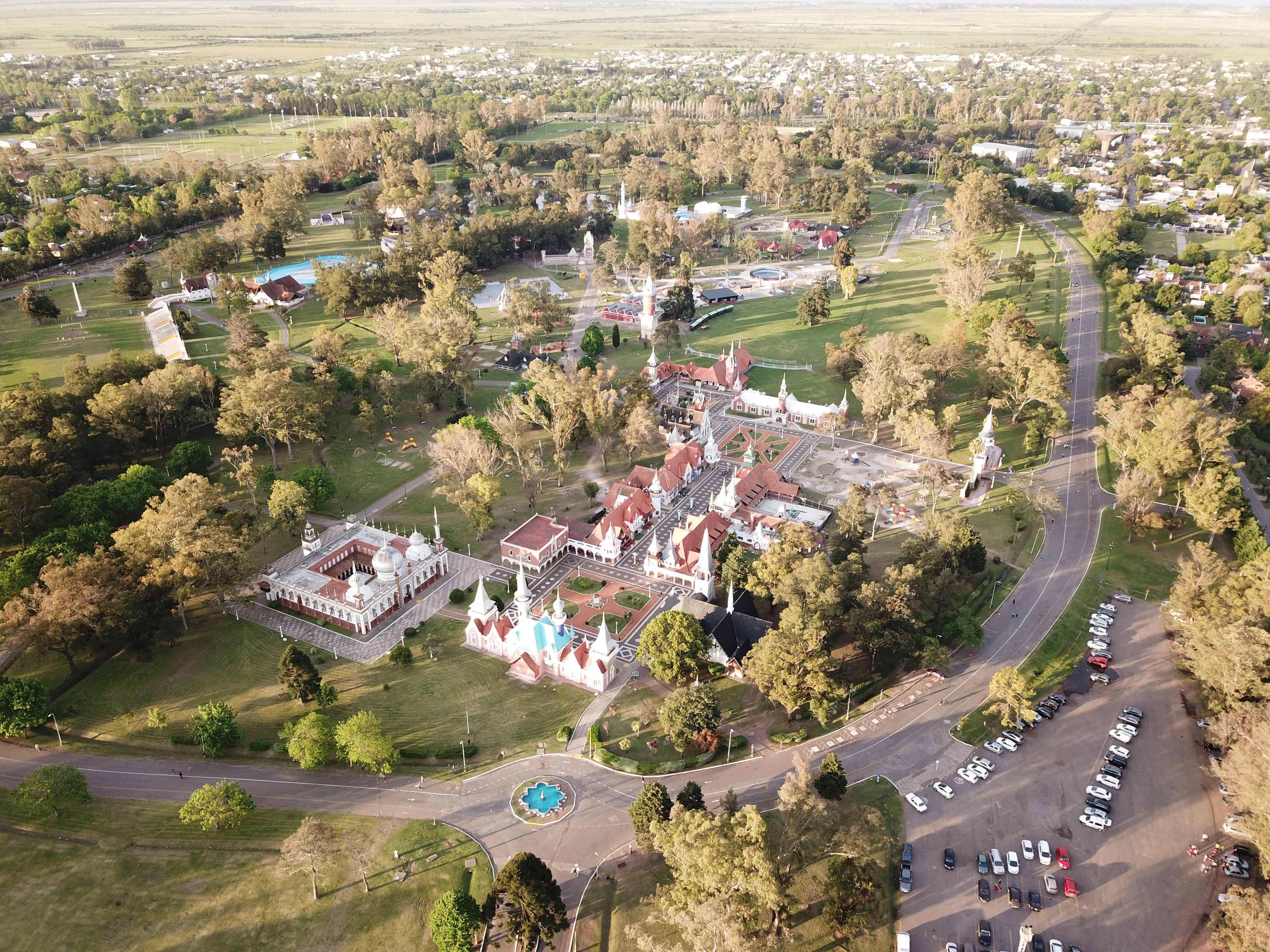
A few years and one drone upgrade later, I was on a backstage shoot at República de los Niños. For anyone unfamiliar: it’s a theme park near La Plata in Argentina, built in 1951 with miniature versions of buildings from around the world. The architecture is cinematic — short, fairy-tale castles and Eastern-European facades, all surrounded by big trees. People say Walt Disney visited and got ideas there for Disneyland. The provenance is debated. The view from a drone is genuinely magical.
I was filming behind-the-scenes footage for a creative session in the park. I had the Mavic 1 — my second drone, the one I bought after the Phantom started feeling outgrown — and I felt confident with it. Hundreds of paying flights at that point. I knew the gear.
What I didn’t account for: the night before, I’d been playing GTA V. Specifically, I’d been flying helicopters in GTA, for hours.
In GTA, the helicopter controls are inverted relative to a real drone. Up on the stick is down on the helicopter. To descend, you push the stick the way I’d push it on a Mavic to climb. I’d done it across an entire evening. Muscle memory had quietly written itself into my hands.
I was bringing the Mavic down toward a low spot near a big tree, trying to land somewhere out of sight of the talent. I needed to descend. I pushed the stick the way “descend” felt to me. The Mavic went backwards, into the tree.
Sound of plastic hitting branches. Leaves shaking. I lost the video feed for half a second. I assumed the drone was finished — there were heavy branches in there, and the angle of impact was wrong.
Then the Mavic stabilized. Not on the ground — in the air, about a meter from the grass, having auto-leveled itself out of the canopy on its way down. It hovered in place, oriented forward like nothing had happened, and waited for me to take the stick again.
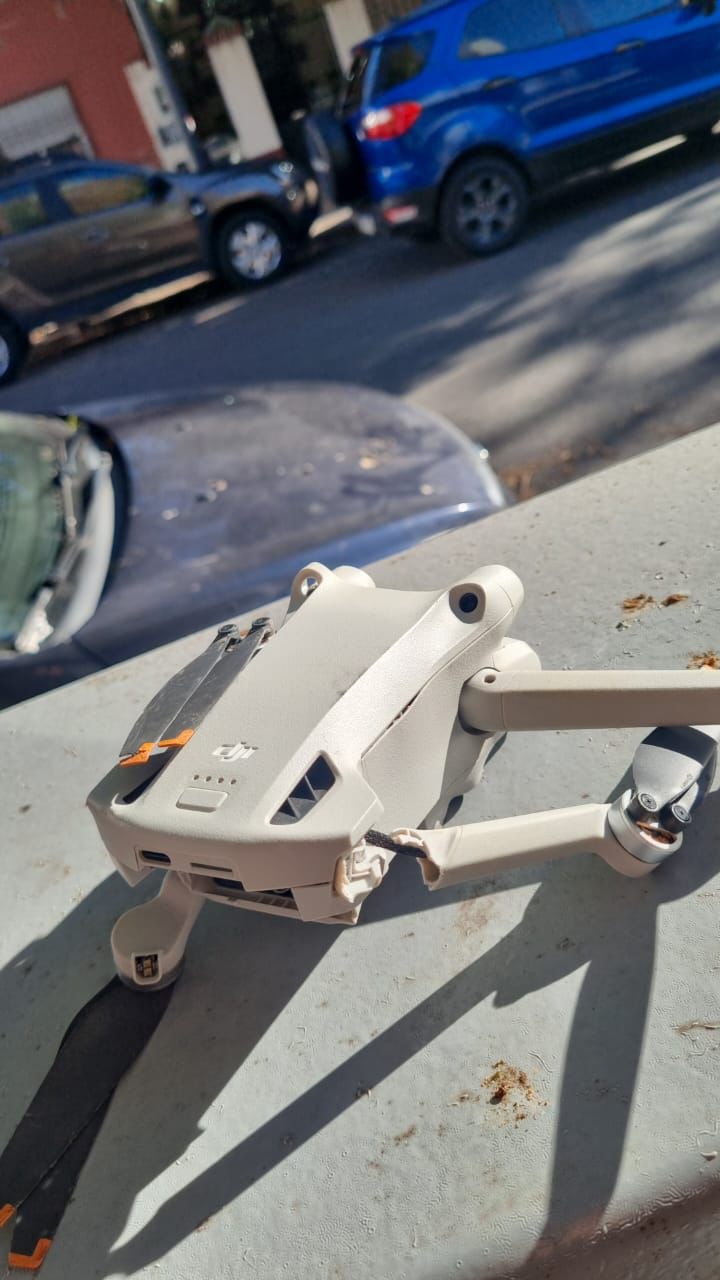
The Mavic is a tank. El Mavic, un caño. I don’t know what kind of stress test DJI runs on those, but my drone went into a small forest and came out hovering with a defiant little look on its face.
The damage was zero structural. The drone was bright green from leaf juice — the body, the props, the underside, all stained from the impact. I flew it home, cleaned it for an hour, and continued using it for paying jobs for another year and a half.
Lesson: Don’t fly drones professionally with cross-wired controls in your hands. The day before a real shoot is the wrong time to play games with inverted helicopter sticks, or to spend time on a simulator with non-default mappings, or to fly a friend’s drone with custom settings. If you have to mix sources, give yourself five minutes of hover with the actual production drone before you commit to any real shot. The brain needs to recalibrate. It will not tell you it needs this — it just betrays you mid-job.
Same problem hits commercial pilots when they switch between aircraft with different yokes or pedal arrangements. It has a name in aviation: negative transfer of training. It’s well-studied. We just don’t talk about it for drones.
Crash №3 — Government Mavic Air 2S, 2023: complacency, in Ensenada
The third one is the worst of the three, and the most useful.
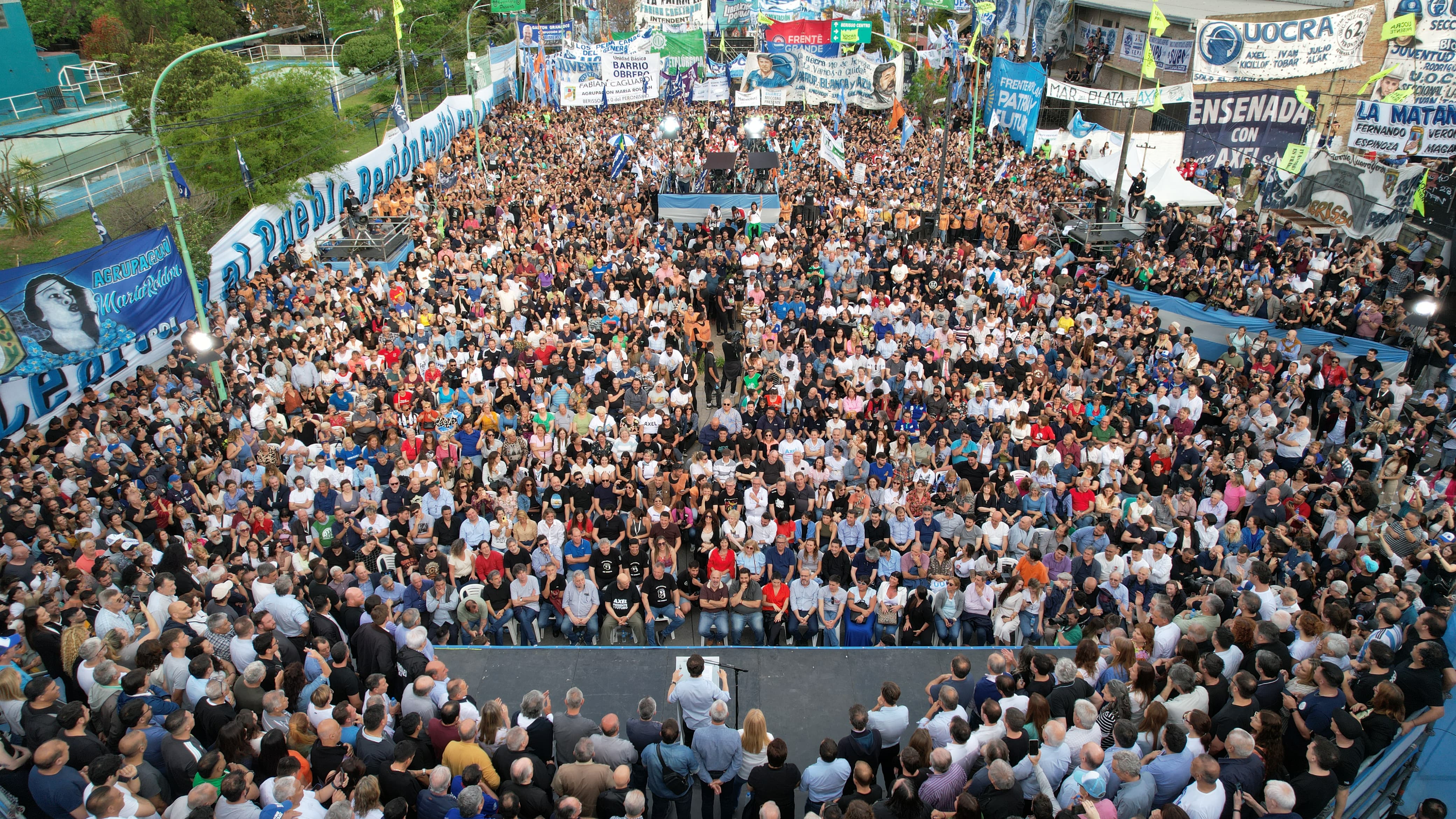
In 2023 I was the official filmmaker for the Governor of Buenos Aires Province — the largest province in Argentina, about 17 million people. The role meant I covered public works, infrastructure inaugurations, official events, and the territorial trips the Governor made for the State. The drones I flew were owned by the State, not me — at the time, the fleet standard was a DJI Mavic Air 2S. The pressure was different. The footage couldn’t be reshot.
The event in question: an official inauguration of a new stormwater infrastructure project in Ensenada, a coastal town in the province. The Governor was there. Local press was there. A few hundred people. My job was the aerial coverage — establishing shots of the area, the works themselves, and a 360 of the ceremony at the moment of the speech.
By that point I had a procedure I’d run hundreds of times without an issue. Identify the highest object in the environment — usually a building, a stage truss, or a tree. Fly above it, always. Keep your altitude buffer above the tallest obstacle and you can move freely without thinking. It was a procedure I trusted. I’d internalized it the way you internalize stopping at a red light.
I did the first 360 around the event from above. Clean. Smooth. Perfect material.
Then I thought: I’ll do another pass at a slightly lower altitude, for visual variety in the edit. I started a descent, felt that I’d dropped enough — felt — and began the second 360.
Halfway through, the drone hit a tree. A tree that was about 30 meters tall. A tree that I had identified during my pre-flight survey as the tallest object in the environment. A tree that I should have been clearly above.
I assumed I’d descended ten meters. I had descended much less. I never checked the telemetry. The drone did exactly what I told it. I just told it the wrong thing.
The drone hit the tree, broke apart, and dropped through branches to the ground. Multiple pieces. Total loss. Everyone at the ceremony saw it. The Governor’s team saw it. The press saw it. It was, briefly, a small public scene.
I started walking toward where the drone had fallen, partly to recover what I could and partly to be visible — not hiding from the consequence. My boss — the head of the production team — caught up to me halfway and said:
“Did you see the drone that just crashed?”
I told him: “Yeah. It’s ours.”
He stared at me for a second, then started laughing. Not unkindly. The kind of laugh that means “you are an adult, this is going to be a problem, and we will deal with it.” The drone was officially totaled. There was paperwork. The work continued.
The footage from the first 360 was clean and made the final cut. Nobody outside the production team ever knew there was a second pass that didn’t happen. Inside the team, the story stayed.
Lesson: This was the worst of the three crashes because it wasn’t inexperience (Crash 1) or external interference (Crash 2). It was complacency. Specifically, professional complacency — the kind that builds up after hundreds of successful flights. Your brain starts skipping the verification steps because the verification has been positive every previous time.
This is the same trap that ends commercial pilot careers. Pilots with 10,000 hours skip a checklist because they “already know how it goes.” Sometimes for years. Then one day the airplane behaves differently than they assumed and there’s no checklist memory to fall back on. Drone work is small-stakes by comparison, but the cognitive failure mode is identical.
The fix isn’t experience. Experience caused the problem. The fix is humility encoded as procedure: a pre-flight and pre-maneuver checklist that you run regardless of how confident you feel. The check that saves you isn’t the one you remember to do because you’re nervous. It’s the one you do because the procedure says you do it, every time, even on flight number eight hundred.
The pattern across all three
Three crashes, three different causes:
| Crash | Drone | Year | Real cause |
|---|---|---|---|
| №1 | Phantom 3 | 2019 | Inexperience — didn’t know the wall effect |
| №2 | Mavic 1 | ~2021 | External interference — cross-wired controls from a video game |
| №3 | Mavic Air 2S (gov fleet) | 2023 | Complacency — assumed instead of verifying |
Different drones. Different conditions. Different parts of my career. The pattern is in what’s not on the list.
Zero of the three were caused by the drone failing. Three of three were caused by me.
This is the most important thing six years of working pilot experience has taught me about drones, and it’s the line that ends up in every other piece I write for this site:
The drone works. The pilot fails. Everything that matters in safe drone operation follows from there.
The industry sells “drone safety” as if it were a feature of the drone — sensors, redundancy, GPS. Those are useful. Those are not what kills drones. What kills drones is a pilot under stress, distraction, fatigue, complacency, or all of the above making one bad call. And no sensor saves you from a bad call.
If you want to fly safer, the highest-leverage move is not buying more sensors. It is training the pilot. Specifically:
- Use the simulator for the model you actually fly, the day before any real job.
- Run a written pre-flight checklist every time, even on flight number eight hundred.
- Learn to recognize when you’re cross-wired, fatigued, or distracted. Reschedule when you are.
- Verify with telemetry, not with feel. Eyes lie. Telemetry doesn’t.
- Build mental models for the specific failure modes — the wall effect, complacency, control transfer, environmental stress — so you can recognize them in real time.
I write more about these in The Pilot Stress Bar and the framework about treating a drone as a finite-life tool — The 20-Flight Amortization Rule. If you’ve ever crashed, or you’re flying with the assumption that you won’t, both are worth your time.
Closing
Three drones. Three errors that were mine. Zero from the drone.
If you’re picking up your first drone, the most useful thing I can tell you is that the problem will be you. That sounds harsh. It’s actually freeing. Drones are reliable mechanical objects with predictable physics. Pilots are humans with mood, sleep deficits, cross-wired memory, and overconfidence. The first one you can buy off a shelf. The second one you have to train.
Most pilots train the wrong half. They buy more drone, more gear, more sensors, hoping to crash less. It doesn’t work. The pilots who crash less are the ones who recognize early that crashing is not a failure of equipment.
Train the half that fails. The math will do the rest.